ع





The Qatar Financial Centre announced on October 19, 2026, that Barzah Capital has joined its Digital Assets Lab as a participant to develop and test a model for real estate tokenization in accordance with the centre’s Digital Assets Framework. The Qatar-based FinTech company is creating infrastructure to transform real estate assets into digital tokens, allowing investors to hold fractional shares in properties under specialist supervision from the real estate sector. Barzah Capital will collaborate with the QFC to navigate the regulatory pathway for these activities while refining its platform, which begins with real estate as the core use case before extending to additional eligible real-world assets. The announcement from the Qatar News Agency framed the partnership as advancing compliant innovation within the QFC’s established rules for digital assets.
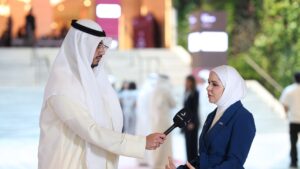
QFC participant records describe Barzah Capital as a registered FinTech firm focused on business-to-business solutions that enable asset owners, issuers, fund managers and financial institutions to structure, issue and manage tokenized assets inside a regulated environment. The company’s model incorporates governance measures along with KYC and AML controls to link real-world assets to blockchain-based issuance and ongoing lifecycle management. Mana Ibrahim Al-Mana, founder and chairman of Barzah Capital, addressed the development directly in the announcement. Al-Mana said, “Our joining the Digital Assets Lab of the Qatar Financial Centre represents an important step for Barzah Capital in its endeavors to create infrastructure for asset tokenization in Qatar that is regulated and compliant with the principles of Islamic Sharia.”
The QFC Digital Assets Framework, which took effect in September 2024 according to the Qatar Financial Centre Authority and Qatar Financial Centre Regulatory Authority, supplies the legal foundation for tokenization including recognition of property rights in tokens and underlying assets as well as rules for custody, transfer and exchange. Permitted tokens under the framework can represent rights linked to real estate among other identifiable off-chain property interests while excluding cryptocurrencies and payment tokens. Qatar Tribune reported in 2024 that the Digital Assets Lab activated with 24 screened participants who receive support from partners such as Google Cloud, Masraf Al Rayan, R3 and the Hashgraph Association to test blockchain solutions.
Earlier entrants to the lab have followed comparable paths, with Dubai-based Tribe incorporating a QFC entity after graduating from the Qatar FinTech Hub accelerator and using the facility to advance its real estate tokenization model ahead of full licensing as reported by multiple industry outlets in August 2026. Stobox, another participant, brought experience tokenizing more than 500 million dollars in assets across multiple jurisdictions according to its disclosures on the QFC directory. These examples illustrate how the lab functions as a controlled setting for developing proof-of-concept projects that align with the framework’s requirements for validators, generators and custodians of permitted tokens.
Yousuf Mohamed Al-Jaida, chief executive officer of the QFC Authority, stated during the Qatar Real Estate Forum in October 2025 that tokenization can lower entry barriers for real estate investment, which would broaden participation and improve liquidity in the sector. A PwC Middle East assessment of GCC government digital transformation identified regulatory initiatives such as the QFC lab among active workstreams that reduce processing friction and support innovation. The framework resulted from consultations with an advisory group of 37 domestic and international organizations spanning finance, technology and legal fields, the Qatar Financial Centre Authority said in its launch materials.
Barzah Capital maintains a PropTech focus with 19 years of real estate experience in Qatar according to founder profiles, positioning the firm to integrate its market knowledge into the tokenized offerings. The lab participation does not confer an operating license but instead facilitates model testing and regulatory coordination, a distinction previous participants have noted in their updates. Further steps toward commercialization will depend on outcomes from the development phase within the QFC’s innovation environment.