ع




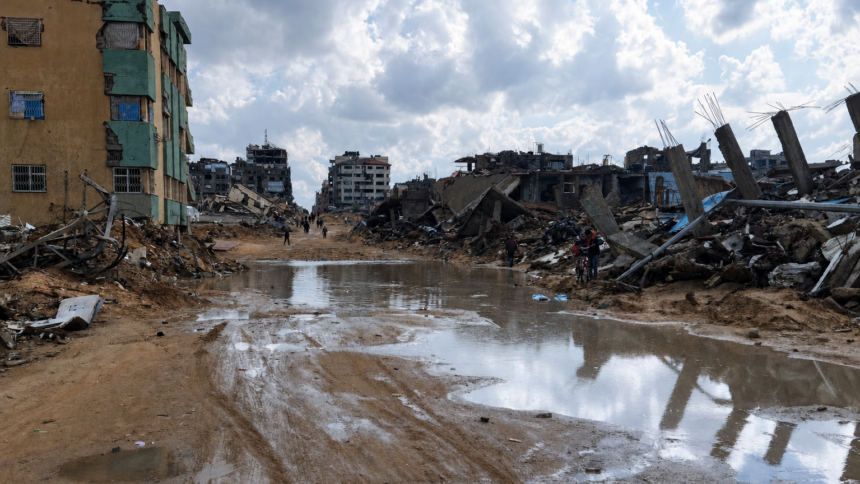
The latest report from UNCTAD presented to the Trade and Development Board outlines the unprecedented collapse of economic activity in Gaza. According to the document, 92 percent of economic establishments have been damaged or destroyed since October 2023. Gaza’s GDP per capita fell to 212 dollars in 2025, representing only 17 percent of its 2022 level and equating to 0.58 dollars per person daily.
UNCTAD figures show unemployment reached 78 percent in Gaza with more than 90 percent of the working-age population not employed last year. The territory’s contribution to overall Palestinian GDP shrank from 17.4 percent prior to October 2023 to under 4 percent in 2025. Productive sectors suffered catastrophic declines with agriculture and industry each contracting 94 percent and construction output plunging 99 percent from 2022 benchmarks.
Price levels in Gaza stood 274 percent higher than in 2022 during 2025, the UNCTAD report indicated, driving up costs for essential items such as potatoes which rose more than 20-fold. A collaborative assessment conducted by the World Bank, the European Union and the United Nations estimated physical infrastructure damage across Gaza at 35.2 billion dollars as of early 2026. That evaluation placed additional economic and social losses at 22.7 billion dollars while setting total recovery and reconstruction requirements at 71.5 billion dollars.
The joint assessment determined housing to be the sector with the highest damage and reconstruction needs followed by impacts on health and education facilities where over half of hospitals and primary clinics became non-operational. UNCTAD noted that the 71.5 billion dollar figure may increase as further damage assessments continue in the absence of a sustained ceasefire. The report also detailed how Gaza’s economic foundations have been propelled from de-development to utter ruin with repercussions likely to persist for decades.
Broader effects extended to the West Bank where the UNCTAD analysis identified tightening constraints on economic activity along with mounting pressure on Palestinian public finances and the banking sector. Hundreds of thousands of jobs vanished across the occupied Palestinian territories erasing 2.8 billion dollars in cumulative labour income according to the trade body. Nighttime luminosity measurements used as a proxy for economic activity showed no meaningful recovery even following periods of reduced hostilities.
The cumulative economic cost of occupation from 2000 to 2024 reached an estimated 212.2 billion dollars in lost potential GDP for the Palestinian economy, UNCTAD calculated, amounting to 19.4 times the GDP recorded in 2024. Such long-term losses compound the challenges facing reconstruction efforts though the current focus remains on addressing immediate post-conflict needs in Gaza. The UNCTAD submission to the Trade and Development Board forms part of ongoing efforts to track and quantify the economic impact on the Palestinian people.