ع




November’s technical conference will examine the steps between a promising design, a practical application and the resources needed to put it into use.
Kuwait is preparing to host an engineering conference that puts investment and practical application alongside technical knowledge. GCC Connect 2026 is scheduled for 29–30 November at Jumeirah Messilah Beach Hotel, bringing the Kuwait chapter of the International Tamil Engineers Forum together with its counterparts across the Gulf.
The current conference announcement identifies three themes: innovation, investment and impact. The combination points to a familiar engineering problem. Producing a promising idea, finding a use for it and securing the resources to implement it are separate tasks, involving people with different responsibilities.
The event offers a concrete setting in which to examine those connections. Its significance will depend less on the breadth of the theme than on the technical work discussed, the problems it addresses and the evidence offered for proposed solutions. A conference can bring those questions together without being presented as proof that projects or investments have already followed.
A professional network with a Gulf focus
The International Tamil Engineers Forum operates through a professional network whose activities extend across Gulf countries. Its Kuwait conference connects a local chapter with that broader community. The structure gives the gathering a regional dimension while keeping its immediate setting and organising responsibilities in Kuwait.
The November announcement describes participation from ITEF’s GCC chapters and invites technical papers, exhibitors and partners. It therefore combines professional exchange with an exhibition format. The two serve related purposes: a technical paper explains an argument or finding, while an exhibition allows organisations to show the equipment, services or applications behind their claims.
The organisers’ public descriptions include engineers, entrepreneurs, investors and other industry professionals among the intended audience. These groups will not necessarily judge the same proposal in the same way. A technically interesting design may still raise questions about cost, operating conditions, maintenance or the availability of relevant skills.
Bringing such questions into one discussion is a more precise ambition than simply promising collaboration. An engineer can explain why a method works. An operator can explain the conditions under which it would have to work. An investor or project sponsor can ask what evidence is needed before resources are committed.
Kuwait already has ideas looking for applications
There is a local context for that conversation beyond the conference itself. At Kuwait University’s 49th Engineering Design Exhibition in January 2026, KUNA reported 46 projects produced by 181 students across engineering disciplines. The exhibition connected graduating students’ theoretical work with practical problems.
Those figures do not establish that the projects were commercialised. They show a body of technical work being presented and examined. Moving from an academic project to a deployed system is a further stage, requiring a clear application, testing and a responsible organisation willing to take it forward.
That distinction is relevant to conferences that combine innovation and investment. A prototype is evidence that a concept has been developed to a particular point. It is not automatically evidence of reliability in an operating environment, a viable production process or a sustainable business model.
For readers outside engineering, these intermediate stages are often the most informative part of the story. The important question is not simply whether an invention exists. It is which problem it addresses, what has been tested and what remains necessary before it can be used by others.
Skills are part of the investment decision
The World Economic Forum’s Future of Jobs Report 2025 found that surveyed employers expected a substantial share of workers’ skills to change by 2030. The report drew on more than 1,000 employers and identified skills gaps as a major obstacle to business transformation.
These findings describe a global employer survey, not a forecast for the number of engineering jobs in Kuwait. Their relevance is narrower and more practical: a new technology depends on people who can select, integrate, operate and maintain it. Purchasing equipment and building the capability to use it are not the same expenditure.
That makes professional development part of an engineering investment discussion. A proposed system may require new technical knowledge, different working practices or cooperation between departments. These requirements need to be understood before a project is described as ready for implementation.
The same applies to the transfer of knowledge across borders. A method used successfully in one setting still needs to be assessed against the conditions of another. Technical exchange is valuable precisely because it allows those differences to be discussed, rather than assuming a solution can be copied without adjustment.
From introductions to evidence
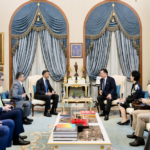
A July report on an ITEF delegation’s meeting with India’s ambassador in Kuwait described discussions about professional links, engineering capabilities and startup collaboration. It also confirmed the November conference dates, which supersede earlier publicity referring to September.
The delegation included Kuwait chapter president Suresh Krishnaswamy and conference director Dr Makendhiran Meyyapan. Their meeting established a diplomatic and professional point of contact for the initiative, although the invitation does not itself confirm participation. The conference’s programme will be clearer as the organiser publishes its final arrangements.
For GCC Connect, the next substantive material will be the technical agenda and the projects presented. Readers should be able to identify an engineering problem, understand the proposed response and distinguish an idea under discussion from an agreement already reached.
That is the useful connection between innovation, investment and impact. The first produces possibilities, the second commits resources, and the third requires evidence of what changed. Kuwait’s November gathering will provide a place to examine the steps between them.