

 ع




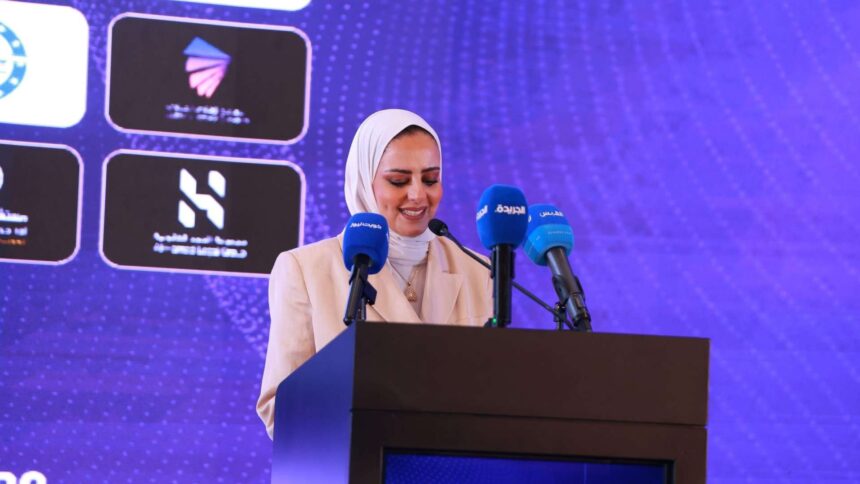
November’s Digital Transformation Kuwait conference arrives as cloud investment, public-service modernisation and regional AI governance converge.
Kuwait’s next stage of digital development is bringing together questions that were once handled separately: where information is stored, how government services use it and what skills organisations need to work with artificial intelligence. The fifth Digital Transformation Kuwait conference, scheduled for 9–10 November at the Crowne Plaza Hotel, will put those connections at the centre of its programme.
Organised by Great Minds Event Management, the gathering comes after a series of national and regional developments in cloud computing and AI policy. Its relevance extends beyond technology procurement. The systems being discussed underpin how public agencies, banks and other institutions exchange information and deliver services to the people using them.
The conference programme covers AI adoption, cybersecurity, smart infrastructure and workforce capabilities. Najat Hussein Ibrahim, identified by the organiser as acting director general of the Central Agency for Information Technology, is listed as conference chairperson. That combination gives the event a public-service focus alongside its enterprise technology agenda.
Cloud infrastructure becomes a national planning issue
One important foundation was set out in March 2025, when Microsoft announced a strategic agreement with Kuwait’s government, represented by CAIT and the Communications and Information Technology Regulatory Authority. The announcement included an intention to establish an Azure cloud region in Kuwait, together with cooperation on AI, cybersecurity and digital skills.
Microsoft also described plans for a technology innovation hub incorporating an AI innovation centre and a cloud centre of excellence. These were presented as parts of the partnership’s programme, bringing infrastructure planning together with guidance on adoption and the development of locally relevant applications.
The distinction matters for the November discussion. A cloud agreement establishes a direction for investment and cooperation; institutions then make their own decisions about applications, information governance and staff responsibilities. The practical work involves both technology teams and the managers who own the services being redesigned.
For a public-facing organisation, that can mean deciding how a digital request moves between departments, how staff access its underlying records and how the user receives an answer. These are service-design decisions as much as computing decisions. They explain why national cloud projects naturally bring operational leadership into a conversation once dominated by infrastructure specialists.
Kuwait’s AI discussion has a regional dimension
The policy context also developed in 2026. The United Nations Office for South-South Cooperation’s account of the Digital Cooperation Organization’s assembly in Kuwait records the adoption of the Kuwait Declaration on Responsible AI for Global Digital Prosperity. It describes commitments spanning responsible governance, digital trade, skills and cooperation between countries.
The same account identifies Kuwait’s e-government modernisation under CAIT as an example discussed within the wider exchange of national experience. It also reports work on trusted data flows and digital-economy frameworks, connecting domestic service delivery with cross-border economic activity.
These developments give AI a wider institutional setting. Systems used by a bank, university or public authority sit within rules and working relationships that extend beyond the organisation itself. Questions about access, accountability and data exchange become part of designing a usable service, particularly when several institutions contribute to the same process.
Bilateral exchanges add another dimension. Kazakhstan’s foreign ministry has reported a meeting with CAIT’s Najat Hussein Ibrahim at which digital public services and possible practical cooperation were discussed. The account says the parties agreed to arrange an online meeting between the relevant authorities. It provides a specific example of the institutional exchange surrounding Kuwait’s digital agenda.
Skills and policy sit alongside the technology
Across the Arab region, UNDP’s digital and AI portfolio describes support for translating digital transformation into development outcomes. Its work includes policy assessment, institutional capacity and support for national implementation. The portfolio also details a regional digital policy framework launched in Doha in November 2025 with Qatar’s communications ministry and Ooredoo.
This provides independent context for the emphasis on workforce capabilities in Kuwait’s conference agenda. The relevant skills include technical specialisms, but also the ability to specify a problem, evaluate an output and manage changes in everyday work. Different institutions need different combinations of those capabilities.
An education provider, for example, must consider the relationship between digital systems and teaching or administration. A financial institution has its own operational and governance requirements. Their technology may share a cloud platform, while the decisions about how it should be used remain specific to each organisation.
That is why a multi-sector programme is useful as a reporting lens. It allows the same broad technology to be examined through different services and responsibilities. The substantive story is the connection between institutional needs and the systems being commissioned to meet them.
From national agreements to operating services
Taken together, the cloud partnership, the Kuwait AI declaration and the regional policy work show several layers of digital development advancing at once. Infrastructure creates capacity, governance defines responsibilities and professional training prepares the people who will operate the resulting services. The relationship between those layers will shape how individual projects are designed.
The November conference gives Kuwait’s public and private organisations a scheduled point at which to discuss that implementation work. Its immediate editorial significance lies in the questions now coming together: how AI fits into existing services, how information moves across institutional boundaries and how staff develop the capabilities needed to manage the change. Those are the operating decisions behind the country’s next generation of digital services.