ع




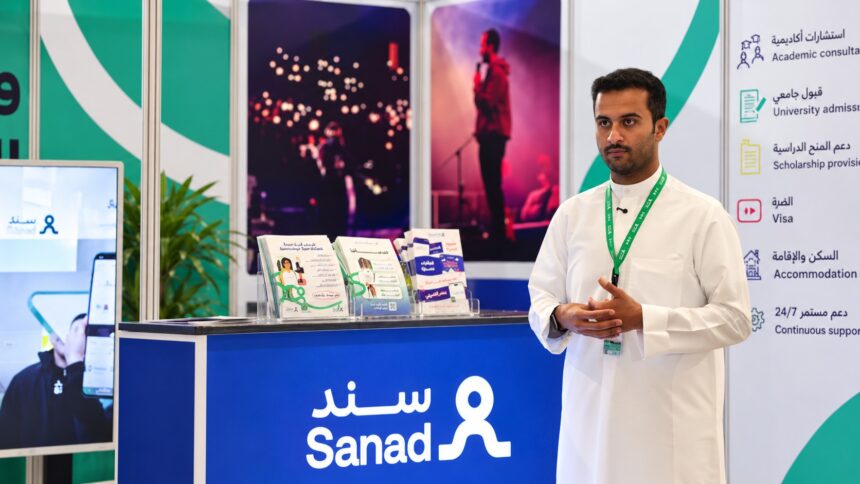
Sanad Education’s HigherED representative described a service built around guiding students through overseas applications, while arguing that accurate information matters most before a family commits to a course.
The most consequential part of a study-abroad decision can be the information a student receives before applying. At HigherED in Kuwait, Sanad Education’s representative returned repeatedly to that point, describing the problems that can follow when students misunderstand the requirements of their chosen route.
Speaking to Diwaniya Media, he said the company aimed to stay close to students throughout the process. His account covered university applications, scholarship-related procedures and the practical support needed as a student prepares to move overseas.
The message placed trust at the centre of the service. For families, an adviser’s usefulness depends on whether the guidance can be understood, checked and connected to the actual requirements of the student’s programme.
A company account of its growth
The Sanad representative said the business had been operating for around five years and had worked with approximately 1,500 students. Those are the company’s own figures, given in the interview, rather than independently audited measures of its activity.
He described an initial focus on the United Kingdom, followed by work with students considering the United States, Australia and New Zealand. He also said Ireland and Malaysia had been added during the year discussed at the exhibition.
The expansion he described raises a practical question for applicants: what experience and support are available for the particular destination they are considering? A broad country list is a useful introduction, but the decision should be made at the level of a course, institution and entry route.
Students can ask which part of that route the company handles and where a university or another responsible body must provide the answer. The distinction helps turn a general service description into a specific plan for the applicant’s own circumstances.
Getting the information right before applying
The representative’s main concern was the effect of inaccurate or incomplete guidance. He described situations in which students discover a problem only after making substantial commitments, creating disruption to their studies and uncertainty for the family.
His account was a reason to ask more precise questions at the beginning. What is the exact programme? Which campus delivers it? What requirements apply to the applicant? If a scholarship is part of the plan, which conditions must be met and who confirms them?
These questions are especially useful where several organisations are involved. University admission, scholarship approval and other steps are separate decisions. An adviser can assist with preparation, but students should understand which organisation is responsible for each outcome.
Sanad’s official website describes support across the overseas-study journey. For a prospective client, the most useful follow-up is to request information in a form that can be checked against the university’s own materials and the relevant official requirements. That gives the student a reference beyond a verbal explanation.
Explaining what a free service includes
The representative described Sanad’s assistance as free to students, a message also visible on the company’s exhibition materials. A family considering the service should ask for the scope of that assistance and the costs that remain payable to other organisations.
The distinction is straightforward but important. Help with an application does not remove the separate costs of tuition, examinations, accommodation or other parts of studying abroad. A clear account of the service allows students to understand what the company is offering without confusing it with the whole budget.
The same discussion can address how recommendations are made. Applicants can ask which institutions the company works with, why particular courses have been shortlisted and what alternatives have been considered. Those answers make it easier to assess whether the recommendation fits the student’s academic interests and preparation.
Sanad’s company profile describes a business connected with the experience of graduates who studied overseas. That background can inform a conversation, while the advice for a current applicant still needs to be checked against the requirements that apply now.
Staying connected after the application
The representative said some students came to the HigherED stand already familiar with Sanad. He presented that recognition as part of an ongoing relationship with students, rather than a service ending when an application is submitted.
The company’s wider offering includes a student-community component. For an applicant, it is worth asking how that relates to their own experience: which support is available before departure, who responds afterwards and which practical matters are handled by the company or another provider.
Clear contact routes matter because the questions change over time. Before an application, a student may need help choosing a course. After an offer, they may need to understand conditions and deadlines. Closer to departure, the discussion can shift towards accommodation and the arrangements for starting study.
A useful service makes those stages easier to follow. Students should be able to identify the next action, keep copies of important correspondence and know whom to contact when a detail is unclear. That clarity also allows families to stay informed without taking the student out of the decision.
Sanad’s HigherED conversation connected the company’s growth with a more fundamental promise: guidance that remains understandable and relevant throughout the process. For prospective students, the next step is to test that promise through specific questions, written answers and a study plan whose requirements they can explain for themselves.