ع





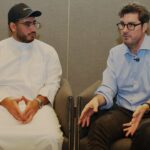
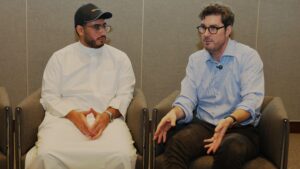
NNUC construction company supported Kuwait’s Women & the Economy conference as a sponsor, with representative Mark Maxwell discussing the company’s interest in AI and the professional skills needed alongside it.
NNUC construction company brought a construction-sector perspective to Kuwait’s Women & the Economy conference, supporting the event as one of its sponsors while joining the discussion about technology, skills and women’s economic participation.
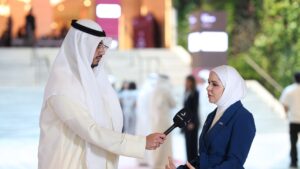
Speaking to Diwaniya Media at the conference, NNUC representative Mark Maxwell described the company’s interest in exploring artificial intelligence across its work. His message connected that ambition with a practical priority: people entering the profession still need to understand its demands, learn from experienced practitioners and master the details of their work.
In a statement supplied following the interview, NNUC said: “We were delighted to support the Women and Economy Conference in Kuwait as a sponsor, an event that reflects our values and commitment to empowering women and advancing their role in the economy.”
Supporting women’s participation in the economy
NNUC’s sponsorship placed the company among the businesses supporting Lei Wa Lakom’s discussion of women’s roles in economic and professional life. The Women & the Economy conference programme brought together subjects including leadership, artificial intelligence, financial technology and practical financial knowledge.
Asked about the company’s support for Lei Wa Lakom, Maxwell said the team had welcomed the idea behind the programme from the outset. He described an interest in contributing to a subject relevant to the changes businesses and workers were experiencing.
“We are trying to give a value and to add something to this topic,” he said, discussing the company’s support for women’s economic empowerment.
The company’s statement makes the purpose of that involvement explicit, linking its sponsorship to supporting women and advancing their role in the economy. Maxwell’s interview added a professional perspective to that position, considering how people develop the capabilities to participate in a changing workplace.
For NNUC, the conference also provided a setting in which to discuss technological change alongside the people expected to work with it. Maxwell spoke about using AI to help and “serve the humanity”, emphasising applications that support people’s work and capabilities.
Exploring AI in construction and fit-outs
Maxwell described NNUC’s work across construction and fit-outs, with projects spanning residential and commercial buildings, banks and stores in Kuwait’s shopping malls. That range formed the background to his comments about the company’s interest in new technology.
“We hope that we will integrate it with AI,” he said.
His comments described a direction the company was looking to explore. They did not announce a particular software platform, implementation timetable or completed AI project. The focus was on how a construction and fit-out business might approach technological change while continuing its work in Kuwait.
That distinction gives the interview a practical context. NNUC’s interest in AI sits alongside the demands of an established profession, where knowledge of the work remains central to decisions about which tools to use.
Maxwell’s comments returned repeatedly to that relationship. Understanding a profession, learning from others and paying attention to detail were the foundations he emphasised when discussing how younger people should prepare for their careers.
Professional knowledge remains central
The relationship between technology and professional capability extends beyond construction. The International Labour Organization’s 2025 assessment of generative AI and jobs estimated that one in four workers worldwide was in an occupation with some degree of exposure to the technology.
That finding concerns tasks that technology could affect. It is not a prediction that a quarter of jobs will disappear. Because most occupations continue to involve tasks requiring human input, the research identified job transformation as the more likely outcome.
The assessment provides wider context for Maxwell’s emphasis on learning. It does not establish the level of AI exposure at NNUC or within Kuwait’s construction industry, but it highlights why professional preparation remains relevant as businesses consider new tools.
“Learn well. Study well,” Maxwell said when asked what advice he would give someone entering his profession.
He stressed the importance of understanding the challenges around them and learning from experienced practitioners. He also urged newcomers to get into the small details of their work, placing close attention to the profession at the centre of his advice.
Coming after his account of NNUC’s construction and fit-out activities, those comments grounded the discussion of AI in the work people would actually need to understand.
Preparing the next generation
The conference’s attention to younger audiences gave that advice a wider setting. Its published programme included a university conversation about jobs, AI, money and the decisions that would shape students’ next decade.
Those themes brought the discussion of economic participation down to choices people make early in their working lives: what to study, whose experience to learn from and how to build the confidence to make professional decisions.
When the interview turned to someone starting a career, Maxwell did not recommend a particular application or qualification. He returned to the habits of learning, understanding the work closely and developing an independent approach.
NNUC’s participation therefore connected two strands of the conference: supporting women’s role in the economy and considering how people prepare for technological change. Its sponsorship statement set out the company’s commitment to the first, while Maxwell’s interview explored the skills and judgement needed for the second.
His closing advice was to build those foundations before deciding how technology could assist.
“Make your structure by yourself and use the tools to help you,” he said.