ع




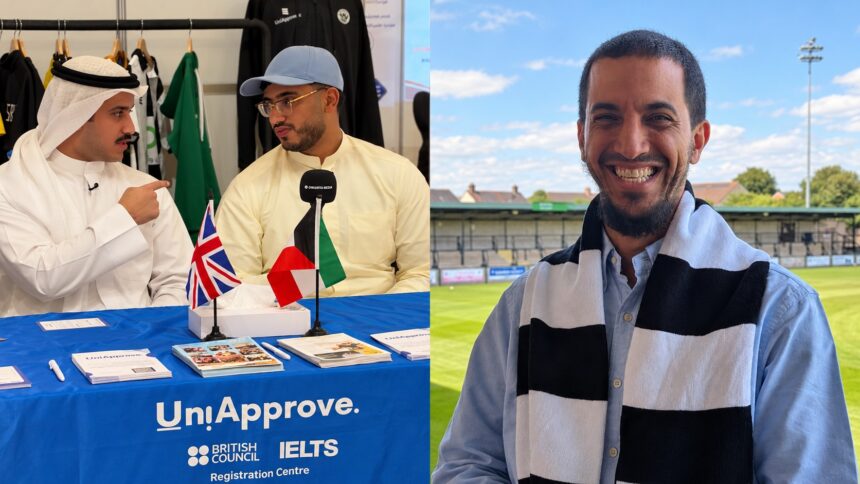
An established sponsorship with UniApprove and plans for sports coaching in private schools reflect chairman Ali Al Hamad’s ambition to give Salisbury a wider role in the lives of young people.
Salisbury FC is exploring plans to provide sports coaching in private schools in Kuwait, extending an interest in education already reflected in its relationship with university consultancy and club sponsor UniApprove.
Chairman Ali Al Hamad told Diwaniya Media that discussions were underway with a couple of schools about physical education, football coaching and a structured programme drawing on the English club’s expertise. The proposal would bring Salisbury into pupils’ regular sporting development, adding to its existing engagement with students through its commercial partners.
For the Kuwaiti owner, education is also personal. Before discussing coaching programmes or sponsorships, Al Hamad pointed to the five years he spent teaching at college level in Kuwait.
“Education and the youth is the most important sector that I care about and is very close to my heart,” he said.
UniApprove connects the club with students
That interest was visible at HigherEd Kuwait, where Salisbury joined UniApprove at the education consultancy’s invitation.
UniApprove sponsors Salisbury’s travel wear. Its work involves helping students pursue university education abroad, including in the United Kingdom, giving the partnership a connection to the country where the club is based.
Speaking to Diwaniya Media at the exhibition, UniApprove’s Faisal discussed the consultancy’s assistance with applications, IELTS and other testing requirements. Its published services also include course selection, scholarship information and guidance on visas and accommodation.
Salisbury’s role at the event was to support its sponsor’s participation. Al Hamad explained that the club tries to contribute to partners’ activities through appearances and engagement where it can be useful.
“We try to be present whenever they want us to be or if we can add value,” he said.
The relationship brings together organisations working with young people in different ways. UniApprove advises students on academic decisions and preparations for studying abroad; Salisbury contributes a sporting connection to England and a club with growing ties to Kuwait.
At HigherEd, those interests came together around students considering their next steps. The appearance also showed how Salisbury’s sponsorship relationships can involve direct participation in a partner’s work, alongside the visibility provided by branding on its clothing.
A teaching background shapes the ambition
Al Hamad spoke warmly about his years in the classroom and said he hopes to return to teaching when his schedule allows. He described education as an opportunity to influence young people’s thinking and the direction of their lives.
That perspective helps explain the range of activities he wants Salisbury to pursue. His interest covers children learning to play, students considering university and young footballers seeking experience in a professional environment.
Football provides a way to reach those groups. During the interview, Al Hamad described its appeal across ages, nationalities and genders, and the opportunities that gives a club to take part in community life.
In Salisbury, he said, that work already includes weekly school visits, football clinics and distributing match tickets to children. According to the chairman, the club’s youth academy involves more than 450 children.
He described opportunities both for those who want to enjoy playing and for those seeking to progress through more competitive football. Participation and player development sit alongside each other, with the academy serving children whose interests and ambitions differ.
The school discussions in Kuwait would draw on that experience, taking the club’s coaching knowledge into an educational setting.
A curriculum for school sport
Al Hamad said the initial proposal for private schools centres on PE, football coaching and other sports coaching, with professional input into how the programme would be developed.
He envisages provision under Salisbury’s name, supported by a curriculum focused on children’s participation and progress.
“It’ll be a proper curriculum and focused on kids and what they want to do and the playing and the development,” he said.
The emphasis is on an organised programme within schools. Al Hamad did not announce participating institutions or a launch timetable, and the discussions have yet to become a confirmed rollout.
This proposed work is distinct from UniApprove’s sponsorship. The consultancy supports university applicants, while Salisbury’s school plans concern the delivery of sports education. Both, however, place the club in contact with young people beyond its usual matchday audience.
For pupils, the substance of the proposal would be in the coaching and curriculum: what they are taught, how they participate and how their development is supported. Those are the elements Al Hamad identified as the starting point for the discussions.
Learning through football
The chairman’s account of Salisbury’s wider work also showed how youth participation can influence decisions around the club.
He said its connection with Andover began after financial difficulties threatened children’s ability to continue playing there. An offer to help cover their fees led to further contact and, eventually, the relationship behind the acquisition of Andover Town. Al Hamad envisages Andover as a sister or feeder club for Salisbury, linking community involvement with a route for player development.
He also wants to continue giving young Kuwaiti footballers short training experiences in England, building on the club’s previous trials initiative.
“It’s just living with the first team, training, practicing, playing a friendly match, maybe,” he said.
Al Hamad distinguished that experience from a promise of a professional contract. The opportunity he described is to understand the routines and expectations of a football environment by spending time inside it.
That same interest in learning connects the club’s different activities: supporting UniApprove at an education exhibition, involving children in football locally and introducing young players to training in England. The next step in Kuwait is to develop the private-school discussions into a programme with defined coaching provision and a curriculum.